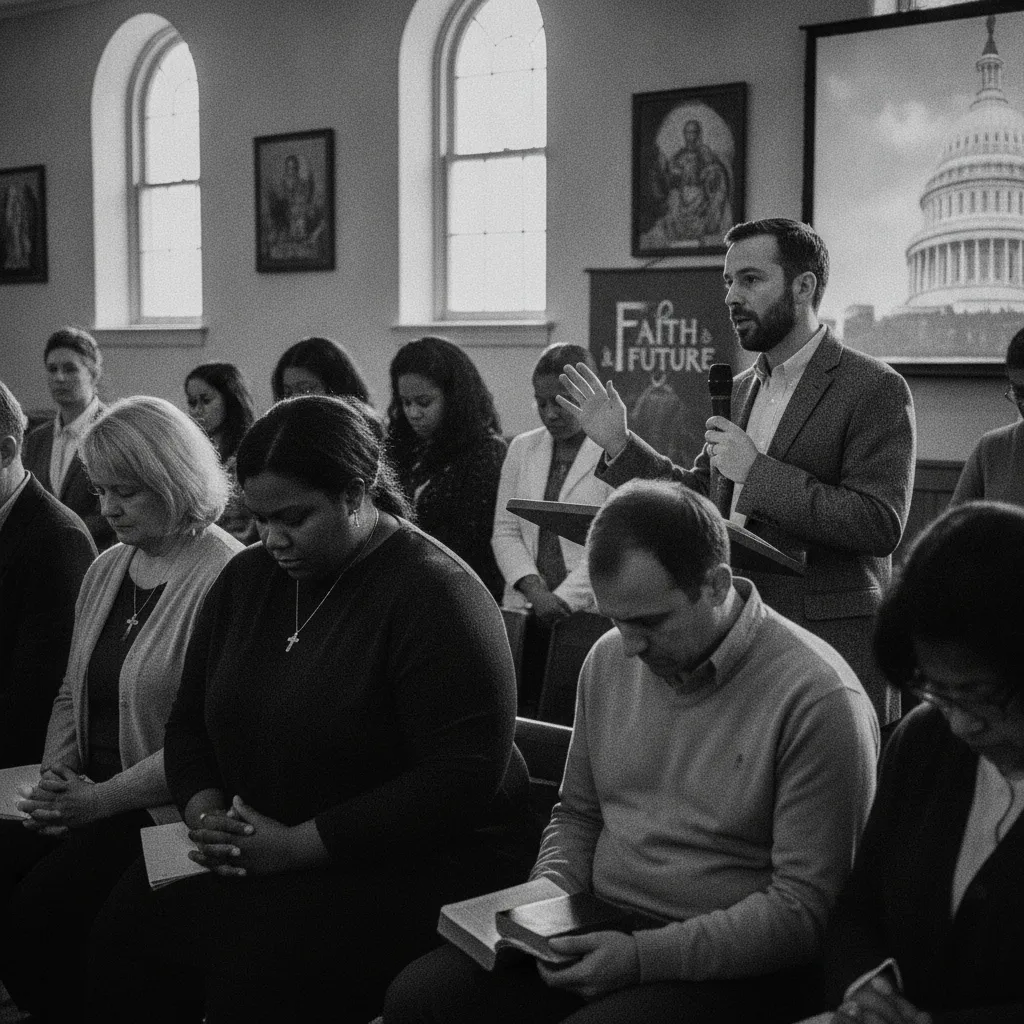
As the United States edges closer to the 2026 midterm elections, the intersection of personal belief and public policy is becoming impossible to ignore. In a recent conversation with WCCO’s Adam Duxter, Dan Hofrenning, a political science professor at St. Olaf College, highlighted how deeply ingrained faith continues to drive voter behavior and candidate platforms across the country. According to Hofrenning, these spiritual convictions are not merely background noise but are actively shaping the strategies used to mobilize voters during this critical election cycle.
The influence of religion is manifesting in various ways throughout Minnesota and beyond, often serving as both a unifying force and a point of contention. While some candidates lean into their faith to build trust with specific constituencies, other religious groups are taking an active stand against divisive rhetoric. This trend was recently evident as local faith leaders organized protests against campaign advertisements that they claimed unfairly targeted the state’s Somali community, demonstrating that spirituality can also act as a catalyst for social justice and communal protection.
Ultimately, the presence of faith in American politics reflects a broader struggle over values and identity in an increasingly polarized landscape. As professors like Hofrenning observe, the way voters translate their private beliefs into political action often decides the outcome of tight races. With several key districts currently seen as deciding factors for party control in the U.S. House, the invisible hand of faith may well be one of the most powerful drivers determining who holds power in Washington come November.